



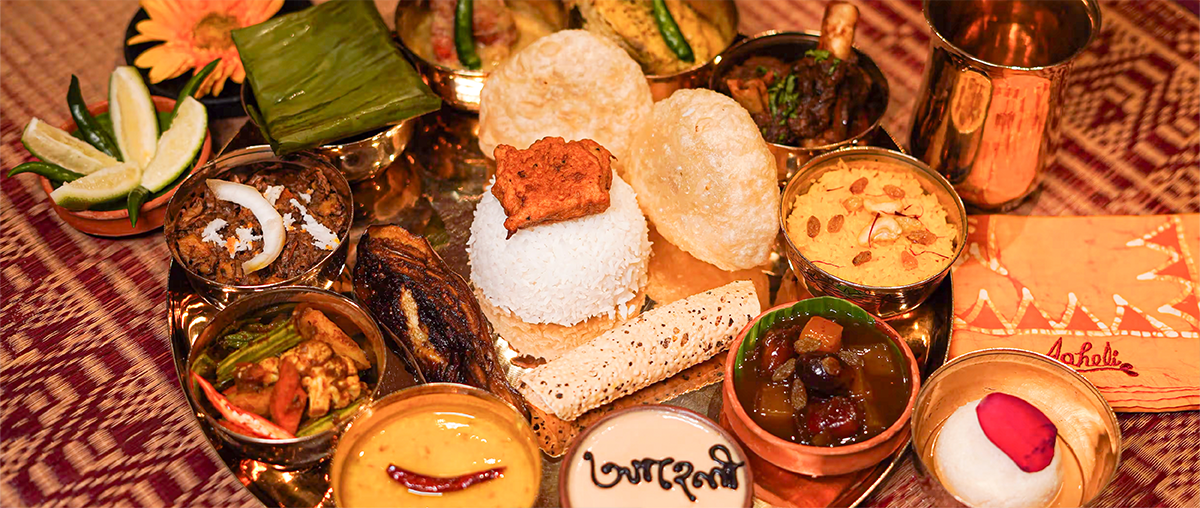

The Eclectic Essence of Bengali Cuisine
Bengal has always been eclectic in embracing various cultures that crossed its path. This is why a quintessential Bengali was once described as someone who wore a dhoti and panjabi (kurta, as it is known elsewhere), smoked a cigar, and read Sartre!
This openness is also reflected in the ingredients used in a Bengali kitchen. While this region was initially reluctant to allow onion and garlic into the sacred space known for its gastronomic magic, it readily embraced vinegar as soon as it arrived on the shores of Eastern India in the 18th century.
The Mystery of ‘Niramish Mangsho’
Interestingly, although deities like Kali accept the sacrificial meat of goats, such meat is never cooked with onion or garlic, as these ingredients are not considered pious. As a result, mutton prepared in traditional households is referred to as Niramish Mangsho (vegetarian mutton) because it excludes both onion and garlic. Yet, it remains utterly delectable!
At the heart of Bengali culture lies its cuisine, which perhaps defines it more than anything else. While food is a cornerstone of all cultures, it holds particular significance for Bengalis, who take great pride in crafting culinary magic with their spices. No other cuisine, perhaps, employs such an elaborate array of spices in such diverse ways as Bengali cuisine. Aaheli Bengali restaurant in Kolkata experiments with the Bengali dishes of bygone eras to satisfy every tastebud.
Classic Bengali Spices and Their Variety of Uses
It is not just the variety of spices but also their versatile applications that make Bengali cooking unique. Take mustard seeds, for instance—they are used in their whole form, ground into a paste, or powdered, each version imparting a distinct flavour.
A hallmark of Bengali cooking is the famous panch phoron—a blend of five spices: fenugreek seeds (methi), cumin seeds (jeera), nigella seeds (kalonji), wild celery seeds (radhuni or joni in Assamese), and fennel seeds (saunf) in equal parts. Many of the spices and ingredients used in Bengali cuisine are shared with neighbouring states like Odisha, Bihar, and Assam. Yet, the final dishes vary in preparation and taste across these regions, offering unique culinary experiences. Aaheli restaurant in Kolkata is bringing back the authentic taste of Bengali cuisine with the usage of diverse spices.
A Play of Spices and the Many Variations of Tel Maach
A fascinating aspect of Bengali cuisine is that even when a dish is prepared using panch phoron, it may use all five spices or just one of them, creating a distinctive variation. Take tel maach (literally "fish in oil")—a dish that can be prepared in multiple ways. It may feature just mustard oil, turmeric, red chilli paste, and hing (asafoetida) or include various combinations of spices, along with onion and garlic in different forms. Yet, all these variations fall under the same name—tel maach!
Aaheli at Peerless Hotel, preserving Authenticity in a Changing World
Unfortunately, changing times and demanding work schedules leave little room for the elaborate cooking that defines Bengali cuisine. As a result, this culinary tradition faces challenges in preserving its authenticity. However, places like Aaheli at Peerless Hotel have stepped in to keep this heritage alive. Aaheli is a pioneer in curating traditional Bengali cuisine, following age-old cooking methods. For example, Dhumrogondhi Eelish. Mr Rajiv Dutta, Cluster Executive Chef of Peerless Hotel, prefers to describe the dish as “Delicately crafted boneless hilsa with a smoky and mustard flavour”.
Delicacy is not restricted to the way it is cooked. It extends to how the raw materials are sourced and prepared. Take the case of spices. It sources organic spices, traditionally grinds them, and recreates the distinctive flavours that once graced the kitchens of Bengali grandmothers. Chef Dutta further adds: “We stone grind our spices (raw turmeric, clove, cinnamon etc) and seeds (mustard, coriander, cumin, etc.) inhouse to retain the purity and freshness as if otherwise processed the flavour gets compromised.
“This valued traditional stone-grinding method also preserves natural flavours and aromas of such delicate ingredients, enhancing the Aaheli culinary experiences.
Global Influences on Bengali Spices and Cooking
Bengali cuisine’s evolution also reflects the region’s openness to global influences. For instance, deemer devil (a variation of the Scotch egg, though some claim it derives from devilled eggs) showcases how Bengal has seamlessly absorbed and adapted foreign influences, making them its own. Bengali cuisine, in many ways, stands as the ultimate testament to Bengal’s eclectic culture, rich, diverse, and ever-evolving. To experience the harmonious blend of spices and flavours, Aaheli Kolkata can be your go-to destination.
Spices like auxiliary verbs provide the context to a dish. Vary them, and the taste of a dish changes just like an auxiliary verb does to a sentence. So, to check out what it means and for an authentic experience of the evolution of Bengali cuisine, you must visit Aaheli Restaurant in Kolkata.
