




Preventing and Treating Bed Sores
What are Bed Sores and Why Do They Occur?
Bed sores, also known as pressure ulcers, and now referred to as pressure injury, occur when continuous pressure is exerted on specific areas of the body for prolonged periods. This pressure restricts blood flow to the underlying tissues, much like how a crimped water pipe restricts the flow of water. Over time, the lack of oxygen and nutrients leads to tissue damage. People who are bedridden or unable to change positions frequently are at the highest risk.
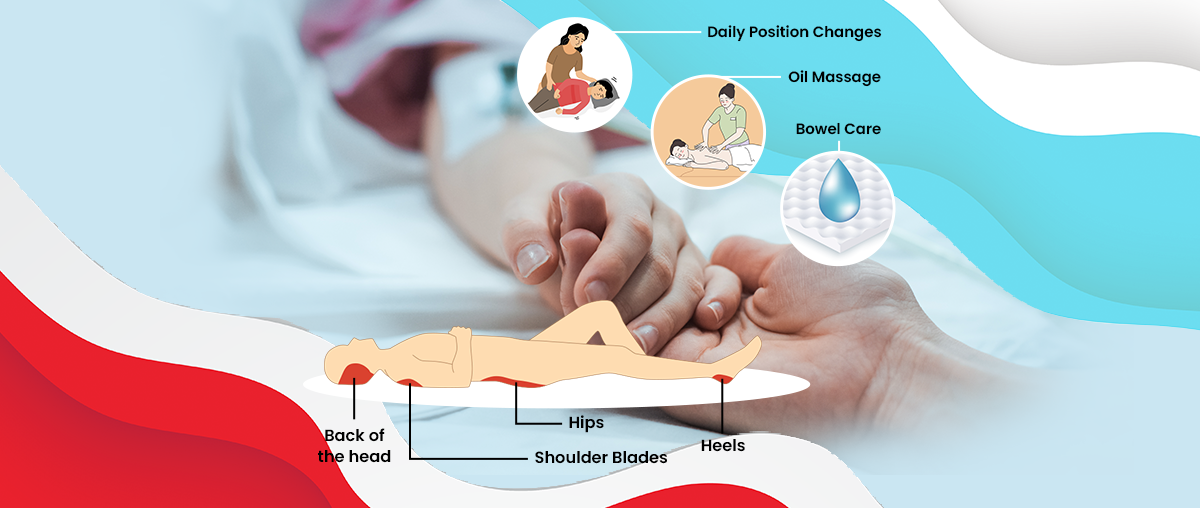
The most commonly affected areas include
- small of the back
- buttocks
- outer sides of hips
- heels
- shoulder blades
- outer sides of ankles and
- back of head
essentially, areas where the body makes the most contact with the bed
How to Prevent Bed Sores
Regular Position Changes: To prevent pressure buildup, it's recommended that patients change their position every two hours. This simple practice allows for proper blood circulation and prevents stress on the pressure points.
Managing Cases Where Position Change is Not Possible: In situations where patients cannot move due to fractures or other medical conditions, special mattresses can be used. For example:
- Custom-Cut Mattresses: Sections of the mattress can be cut out to relieve pressure on specific points.
- Air Mattresses: These continuously adjust pressure on different areas of the body, reducing the chance of sores developing.
Hourly Position Changes and Oil Massage: In addition to two-hour position changes, for some patients, hourly repositioning may be required. Massaging the back with oil not only promotes blood flow but also allows caregivers to check for early signs of pressure injuries. Regular inspection of pressure points (3-4 times a day) is also recommended, and any at-risk areas can be covered with synthetic sheets like Tegaderm to prevent the skin from breaking.
Early Warning Signs of Bed Sores: Non-Blanchable Erythema (NBE)
One of the earliest signs of a developing pressure ulcer is Non-Blanchable Erythema (NBE). This is a red or discolored area of the skin that does not fade (or "blanch") when pressed. NBE is classified as a Category 1 pressure ulcer. People who develop NBE are at a significantly higher risk of progressing to a Stage 2 ulcer within a few days. Immediate medical attention is essential at this stage to prevent further damage.
Caring for Bed Sores
Unfortunately, patients generally seek medical help only after their injuries have moved into Stage 2 or grade 2. Grade 2 or Stage 2 bed sores are characterized by:
- Open wounds of varying sizes
- Bleeding
- Discharge and odor
- Formation of slough (dead tissue)
Treatment of Stage 2 sores requires specialized care under the guidelines of the National Pressure Injury Advisory Panel (NPIAP). Earlier treatment protocols focused on drying out the wound, but modern techniques emphasize moist wound healing. This approach keeps the wound environment moist, promotes faster healing, and allows for the absorption of internal discharges.
The affected area is typically cleaned, treated with appropriate medication, and covered with dressings designed to absorb discharge and slough. The frequency of treatment depends on the severity of the wound, and monitoring progress is crucial. Serial photography is often used to track healing and guide adjustments in treatment.
Managing Wounds at Different Stages
For a simple break in the skin without discharge, applying a wound-specific ointment once or twice a day may suffice. However, for more advanced wounds with discharge, proper dressings are required to absorb fluid and promote healing. These dressings need to be changed according to medical guidance, and treatment protocols often vary depending on the patient's condition. One must bear in mind that monitoring of a patient’s nutrition is extremely important as it has a vital role in aiding the healing process.
Extreme Cases of Bed Sores
In severe cases, a comprehensive reassessment is required. Care teams review:
- The effectiveness of the current treatment plan
- The patient's nutritional status (as low protein and iron levels can delay healing)
- The function of critical organs like the kidneys, since kidney impairment can negatively impact wound healing
Severe cases may also require advanced nutritional support, such as rice-tube feeding or intravenous nutrition. High-tech air mattresses can also provide relief, offering dynamic pressure changes to reduce strain on affected areas.
Palliative Care for Bed Sore Patients
When bed sores are part of a broader palliative care plan, the focus shifts to comfort and prevention of further complications. Four key areas must be monitored:
- Stiffness of Limbs – Passive limb exercises help maintain mobility and prevent joint stiffness.
- Hypostatic Pneumonia – Prolonged immobility increases the risk of pneumonia. Chest physiotherapy and cough simulation help clear lung secretions and prevent infection.
- Pressure Injuries – Continuous monitoring for pressure injuries is vital, along with position changes and specialized mattresses.
- Deep Venous Thrombosis (DVT) – Long periods of immobility increase the risk of blood clots. DVT prevention tools like special stockings, massaging tools, and medications are used to promote blood flow.
- Plastic surgery is required for advanced Grade III and Grade IV, when healing cannot be obtained with conventional dressing methods, and so the wounds need some cover from outside to avoid infection and sequelae.
Bladder and Bowel Control in Bedridden Patients
Bladder and bowel care are essential, especially for elderly, bed-confined patients. Catheters are used to manage urinary incontinence, while enemas may be used for bowel toileting. Bowel care is increasingly being seen as a distinct medical specialty.
Conclusion
Bed sores are preventable and treatable if detected early. Prevention focuses on position changes, the use of air mattresses, and the early identification of Non-Blanchable Erythema (NBE). If a sore progresses to Stage 2 or beyond, medical attention is required to prevent complications. Modern treatment prioritizes moist wound healing, as well as ongoing monitoring through photography and professional evaluation. For severe cases, a holistic approach addressing nutrition, posture, and pressure relief is essential. Palliative care for patients with chronic immobility focuses on preventing pneumonia, pressure injuries, DVT, and maintaining bladder and bowel control.
For medical consultations, click here to access Peerless Hospital's online doctor booking facility
You may also like

Not All Chest Pains Need Cardiology Treatment
Jun 23, 2023All chest pains are not heart attacks and all heart attacks may not be associated with chest pain.
Read More

Dengue – Symptoms & Preventive Measures
Nov 15, 2021Dengue is a mosquito-borne viral disease which poses high medical burden in many regions worldwide.
Read More
The pregnancy period is normally a joyous, fulfilling and satisfying experience for most mothers...
Read More