



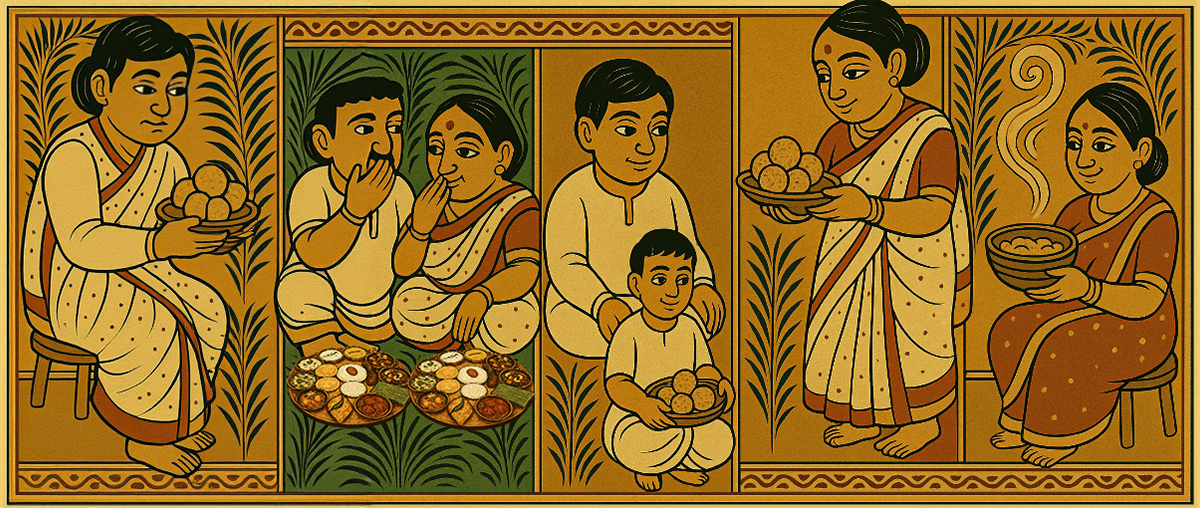

Aaheli’s Nobo Borsho is about curating the Bengalis’ best culinary tradition
It is said that the Moghul Emperor Akbar had the then royal lunar Hijri calendar aligned with solar agricultural practices as recorded by the Fasholi Shan (Harvest Calendar). This led to the development of the Bengali calendar, Bangabda – with the first day of the first month, Boisakh, heralding the beginning of a new year. The underlying reason was simple – streamlining the process of revenue collection. Some date it back much further, to the 7th century Bengali king Shashanka, but the causality remains – the coincidence of the land tax collection with the gathering of the spring harvest.
A day to celebrate life
For a community whose mainstay was agriculture, the day was auspicious as the people gathered the harvest and celebrated the boon of nature. Trade and commerce, too, were an integral part of the largely agrarian society. The backbone of prosperity was also agrarian. Therefore, it was only natural that all new accounts would be drawn up on this day, settling the old balances. When the new was ushered in, bounties were celebrated, relationships were renewed, new clothes were draped in, and culinary spreads were dug into - when joy and happiness were spread -- would naturally imply a day of celebration.
A good part of the celebrations centred around the laying out of community spreads, where entire villages would eat together to strengthen their bonds of fraternity through food. Over time, this practice of holding feasts to celebrate the ushering of the Nobo (New) Borsho (Year) has evolved, as have the culinary practices that originally incorporated dishes prepared from seasonal vegetables and fleshy nutriments like fish and meat.
A melting pot of global culinary influences
The spread of time and the co-option of influences from sources as diverse as Moghul and Awadhi on the one hand and Portuguese and French on the other, not to mention Chinese, have led to the creation of a potpourri: a palate that greeted the connoisseurs as they celebrated the occasion. It must also be mentioned here that socio-cultural stimuli from specific regions of Bengal that developed elaborate gastronomic rituals have also left indelible marks on the metamorphosis of the village fests of yore into the food fiesta of the present.
Desserts: An intrinsic part of Bengal’s cuisine
The Bengalis are celebrated for their sweet tooth, and it is but natural that the encore will always be on a sweet note. Naturally, the Bengalis have raised the preparation of sweetmeats to the level of being a fine art. Art, that pays a tribute to the grand finale of a kaleidoscope of courses that begin with the bitter, and gradually move through the bland, the umami (savoury), salty, and sour, each dish highlighting the finer nuances of sensitivities, of palates unique in themselves. It will not be an exaggeration to say that such meals are much more than cooked exotica - they are a celebration of the senses, where the visual and the olfactory, expose one to feel the tactile explosion of the celebration of the flavours.
Aaheli is the keeper of Bengal’s culinary tradition
Aaheli is the keeper of this tradition. Aaheli is the curator of cuisines that are almost lost to time, some even forgotten. Aaheli is the gallery where time-worn gourmet masterpieces are restored and recreated to the delight of the epicure. Aaheli is the bastion of a tradition that has taken hundreds of years to evolve, spreading equal delight in the lavish banquets befitting a king and the frugal victuals of the dowagers through to the community celebratory repasts. Some of the names of the dishes may well be household names, yet the original way of cooking may have been compromised. Take the case of kacha aamer chutney. One needs to taste it here to know the difference.
Then the kumorparar morog pulao. This dish is a speciality from Dhaka and needs cock (and not chicken as in murgi) meat as its main ingredient. It also needs a special rice that is short grained and flavour-full, and cumin and coriander in generous proportions are best avoided to bring out its original flavour. This dish is now a rarity in the kitchens of West Bengal, and we have made it a point to preserve its traditional flavour for our discerning clients.
Then there are such items as Goyna Bodi, Sabji Ghonto, Aloo Dom in Tomato Badam, Echor Posto , Mochar Paturi, Hing Dal kochuri, Ghondoraj Bhetki, Pulao Rajnondini, and Malai Bhog. But again, Nobo Borsho is not merely about finding one's way to the heart through the stomach. It is not merely about digging into a delectable legacy whose richness cannot be fathomed. It is not merely about tracing one's roots through the high notes of dishes that are exclusively created and curated to tango with the highest expectations of aficionados. It is not merely about anecdotes from history that come sizzling hot, outpourings from an artist's heart.
It is about celebration. It is about the celebration of a people. Celebration of a culture, a way of life. At Aaheli, we look at ourselves as the keepers of Bengal's enduring affair with all things edible..
Nabo Bosrsho or Bengali New Year is about food and family, about flaunting the best culinary tradition. Aaheli at the Peerless Hotel curates the diverse and complex culinary tradition of Bengali for you.
You may also like
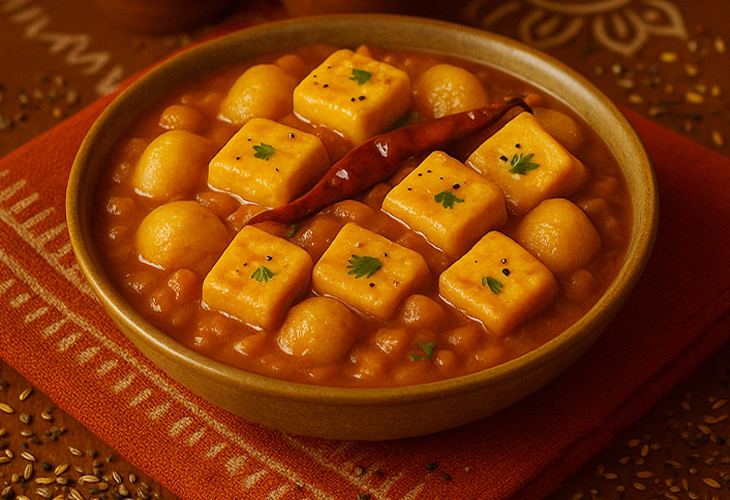
From Aaheli’s Chef’s Corner: Panch Phoron Chhana
May 20, 2025In the heat of the summer, one pines for those mellow, less spicy foods on the table. And the traditional Bengali kitchen has a plethora to satiate a King’s feast in the summer.
Read More
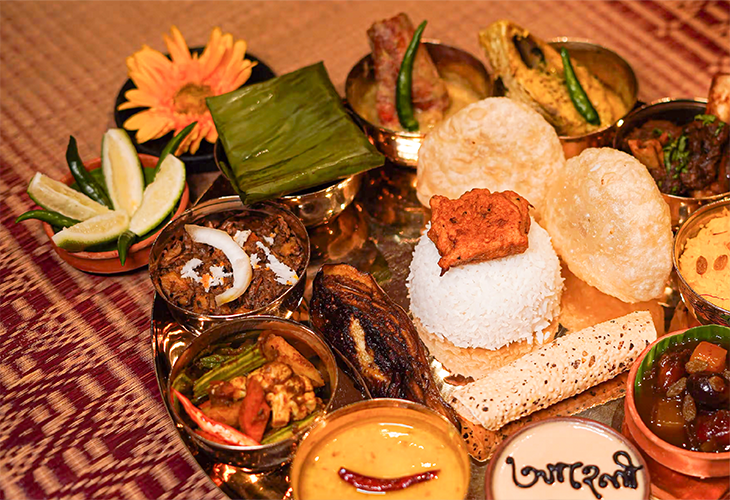
The Eclectic Essence of Bengali Cuisine
Mar 27, 2025Bengal has always been eclectic in embracing various cultures that crossed its path. This is why a quintessential Bengali was once described as someone who wore a dhoti and panjabi (kurta, as it is known elsewhere), smoked a cigar, and read Sartre!
Read More