



How Regular Cancer Screening Helps in Early Detection and Cure?
Most Cancers Start without Symptoms
We all know that there are a few most common cancer types, if detected early, are curable. But the catch is that some cancers have no symptoms in their early stages. When the symptoms surface, the cancer will have progressed substantially. This is where regular screening comes into play.
A regular check-up, albeit screening, helps in the detection of malignancy in its infancy. In the cases of those cancers that take time to move from the early to the advanced stage, such screenings offer obvious benefits. This is important as cancer care has a degree of difficulty ingrained in it, and preventive steps in all cases are better than addressing a malaise after its onset.
The Classic example is cervical cancer, which may remain in a pre-malignant state for up to a decade and a half, which is referred to as carcinoma in situ. Screening in such cases will be greatly helpful.
Not all Cancers are Amenable to Easy Screening
The second point that needs to be recorded is accessibility. The cancers in the pancreas or in the gall bladder, for example, are difficult to scan and detect, as often, the only way would be a CT scan, which has its shortcomings. After all, how many times can a patient be subjected to a CT scan? But cancer of the skin, or breast cancer, can be clinically examined and detected with relative ease, because of the accessibility.
There are professional bodies like the U.S. Preventive Services Task Force (USPSTF) or the European Society for Medical Oncology (ESMO), who have recommended that certain types of cancers may be subjected to identification by screening. Cervical and Breast cancer tops both the lists.
Regular Cancer Screening Tests are Non-invasive
The screening tests need to be non-invasive, and the cancer has to be of a slow-growth type. The ease with which the tests can be conducted is also a determining factor.
In cases of cervical cancer, for example, between 20 and 30 years of age, a pap smear test is conducted at three yearly intervals. After 30 years, the HPV DNA test, which screens the DNA of human papillomaviruses (HPV), is also done as HPV infection is one of the prerequisites for cervical cancer to manifest itself.
Normally, such tests are not done after the age of 65. Again, in cases where the uterus may have been removed, the question of such tests does not arise.
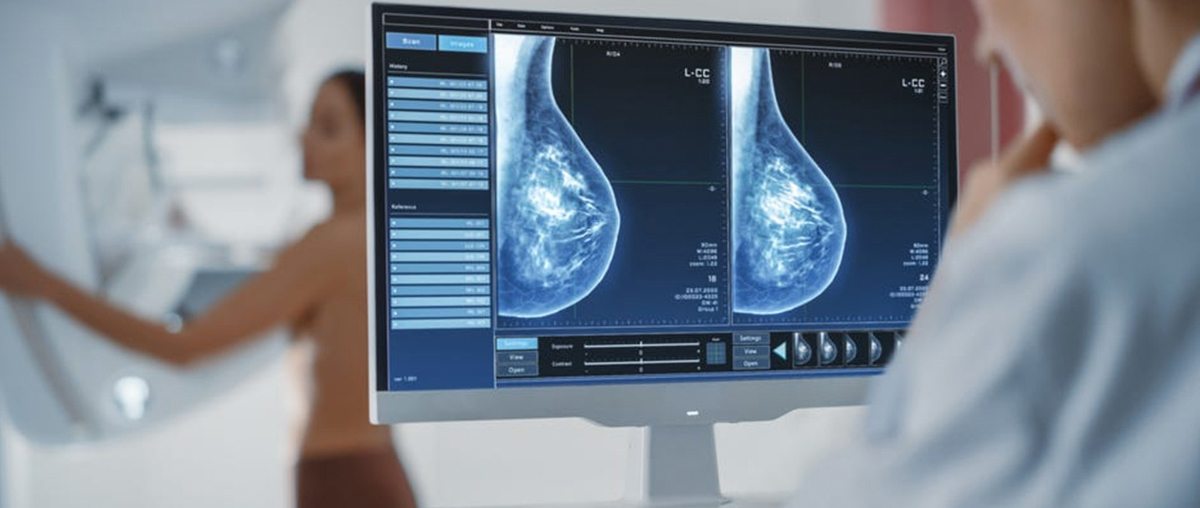
In the case of breast cancer, a mammography or ultrasound test is recommended every two years after the age of 25. However, in cases of high-risk individuals – people who have instances of breast or uterine cancer in the family – such tests are recommended every year.
There are other recommended screening methodologies though they are not universally accepted. For example, the prostate-specific antigen (PSA) test is normally suggested yearly after the age of 50 and is relatively easy to conduct.
However, this elevated PSA level may be closely related to Prostate Specific Anxiety. This refers to the anxiety of a patient before the test about the level of PSA that the test may reveal. Although the relation between anxiety and elevated PSA levels is not clearly understood, it is generally found that such anxiety tends to raise PSA levels as well.
Second in line would be lung cancer, which is among the worst forms. The incidence of death is extremely high and is virtually never detected in the early stages. X-Ray tests are ineffective. CT scans are effective but expose patients to higher radiations. We now have low-dose CT scans as a screening mechanism, which is followed in certain western countries where the infrastructure is available, but it has yet to be available here in India.
Family History Should Make Us Cautious
Family history of colorectal cancer (CRC) is a known risk factor for CRC, and encompasses both genetic and shared environmental risk. Persons with a family history of CRC should, as a matter of course, go for periodic colonoscopies.
However, for the general population, various tests (like the faecal immunochemical test (FIT) and the Cologuard test) are conducted to detect the presence of blood in the stool. For liver and pancreatic cancers there are prescribed ultrasound tests.
There are Vaccines for Some Cancers
Cancer vaccination, especially for cervical cancer, is another area that we need to be aware of.
HPV infection is one of the prerequisites for cervical cancer. Now, with vaccination, if HPV infection can be prevented, then the probability of the infection leading to malignancy can also be guarded against. Again, these vaccines have multiple strains, and the ones causing cancer are generally 16, 18, 6, and 11. If these strains, primarily 16 and 18, are prevented through vaccination, the chances of the infections morphing into cancer can be guarded against, even up to 99 per cent of the cases. Two doses of these vaccines are administered before the start of sexual activities, ideally between the ages of 9 and 15. However, between the ages of 16 and 45, three doses are required. Vaccines also help guard against oropharyngeal and anal cancer.
A completely tissue-free test that detects circulating tumour DNA (ctDNA) for minimal residual disease (MRD) assessment in early-stage colorectal, breast, and lung cancers is also available these days. In addition to detection of MRD, such tests are also available to monitor recurrence in previously diagnosed patients. However, their affordability continues to remain a challenge.
Cancers, if detected early, can be treated, endowing them with a longer life expectancy. For this, regular preventive medical check-ups are needed in hospitals like Peerless Hospital, where state-of-the-art screening facilities in multiple disciplines are available.
You may also like

From Aaheli’s Chef’s Corner: Panch Phoron Chhana
May 20, 2025In the heat of the summer, one pines for those mellow, less spicy foods on the table. And the traditional Bengali kitchen has a plethora to satiate a King’s feast in the summer.
Read More

Aaheli: Reviving Tradition with a Green Twist
Apr 30, 2025Sustainability is more than making the right noises about fossil fuels – it is a way of life for us in the Peerless Group.
Read More
It is said that the Mughal Emperor Akbar had the then-royal lunar Hijri calendar aligned with solar agricultural practices as recorded by the Fasholi Shan (Harvest Calendar). This led to the development of the Bengali calendar Bangabda, with the first day of the first month, Boisakh, heralding the beginning of a new year.
Read More
When thinking about the life-threatening consequences of smoking, lung cancer often comes to mind first. However, another serious yet lesser-discussed risk for male smokers is bladder cancer.
Read More
Sugar is slowly losing its fame as a sweetener and is increasingly being understood more as a disease than the role that nature has bestowed on it. It is also losing its role as a snack that a guest is treated with as a gesture of welcome. Instead, it is now a dreaded word that implies impaired life. The following statistic alone is enough to prove the point.
Read More