



Chemoport Insertion: Risks, Benefits and Aftercare
Written by PeerlessOne on 30-10-2026
Medically Reviewed by Dr. Pragati Sanganeria (DNB - Gen Surgery & Fellowship in Breast Onco Surgery - MUHS)
Last Update on 30-10-2026
Table of Content
- Introduction
- What is Chemoport?
- Why Is Chemoport Insertion Recommended?
- Chemoport Insertion Procedure
- Benefits of Chemoport Insertion
- How Long Can a Chemoport Stay In
6.1 Cost of Chemoport Insertion in India - Frequently Asked Questions:
- Conclusion
Introduction
Chemoport has come in as a blessing for cancer patients. It is generally used for patients who need long-term chemotherapy that needs to be pushed into the blood and risks damaging a vein due to repeated use of it for carrying chemo medicines.
What is Chemoport?
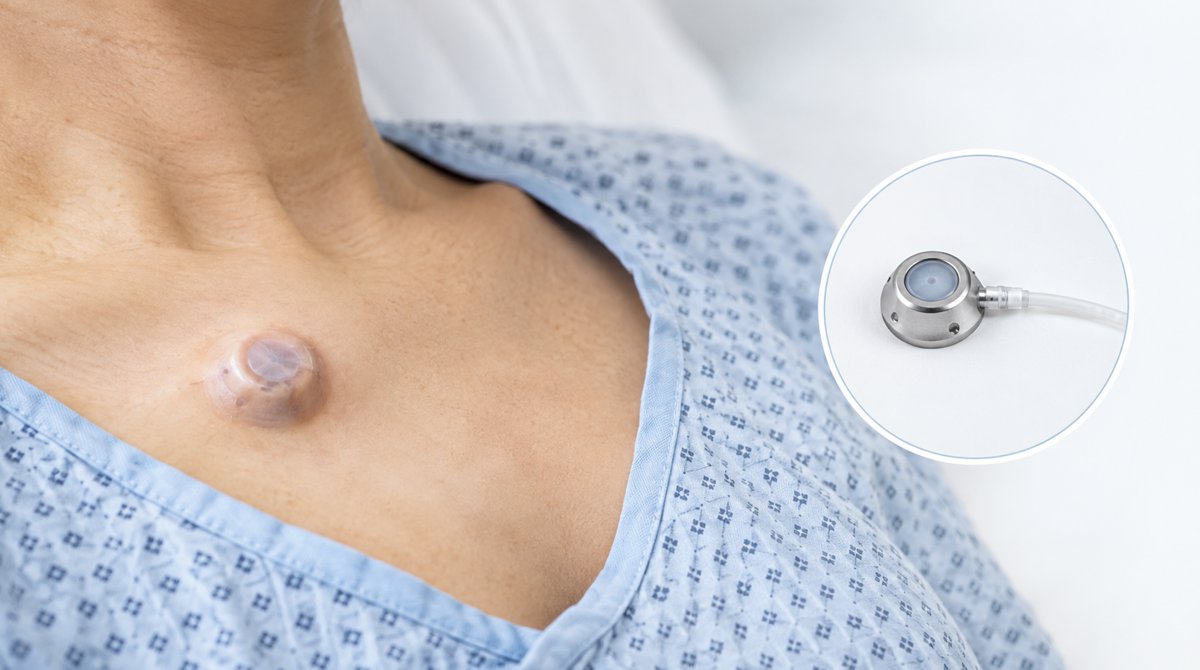
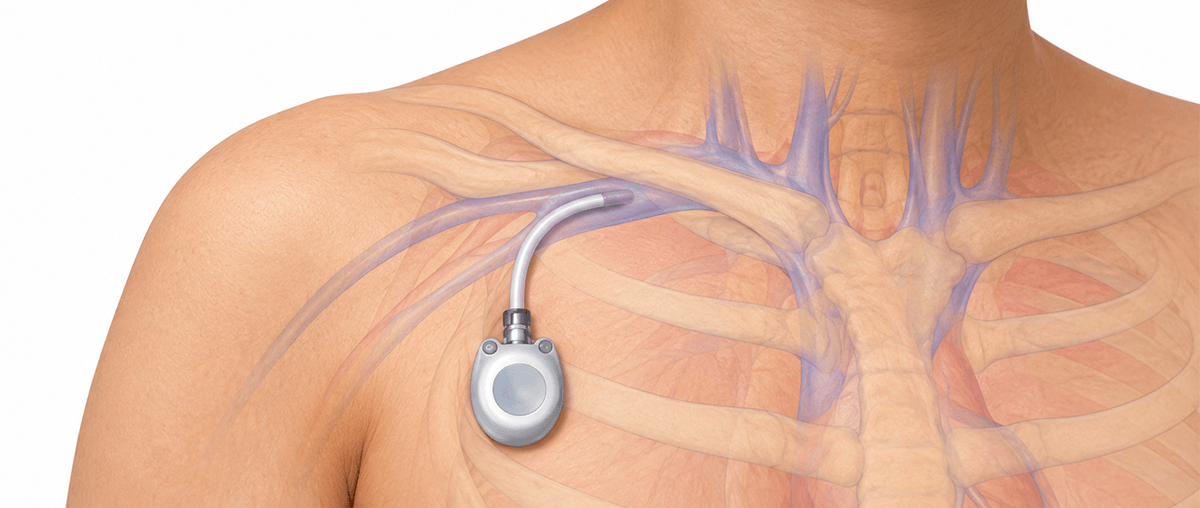
Chemoport is a device that is placed subcutaneously inside a major vein so that the peripheral veins are not used repeatedly. It has a reservoir (a septum) and a catheter. The chemo needle takes the medicine inside the reservoir and the reservoir feeds the medicine into the catheter which further carries the drug to the major vein of the patient.
Why Is Chemoport Insertion Recommended?
It is recommended because it reduces the number of needle insertions. Due to the toxicity of
chemotherapy, the veins become thrombosed and are often wasted and cannot be used for future
emergencies. Chemoport helps save the peripheral veins for future emergencies. It is also less painful for the patient as it obviates the need for multiple pricks, which are often required in peripheral
intracath devices.
Chemoport Insertion Procedure
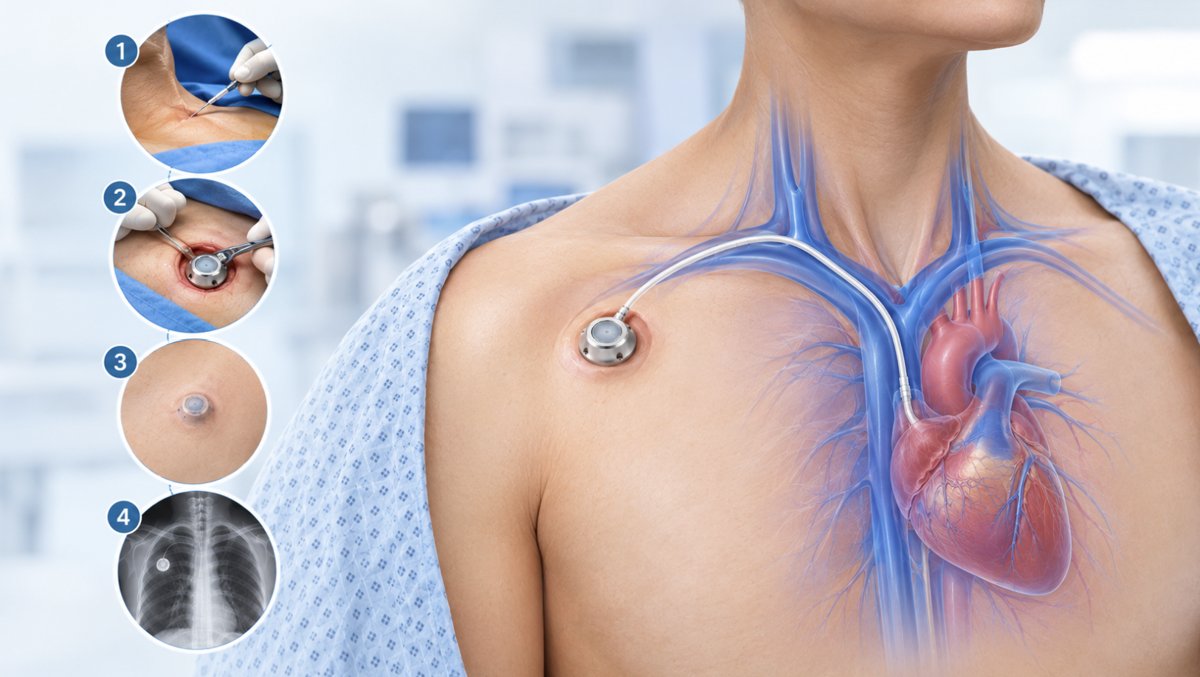
It is a highly specialised procedure that requires specialised training. It can be done both with general and local anaesthesia. However, for local anaesthesia, patient compliance is needed, as it is slightly painful. During the procedure, a canal is created into the vein, where the port is placed. A pocket is
created below the clavicle where a diaphragm or reservoir is placed. This diaphragm or reservoir is used for injection of chemotherapy via a chemo needle.
It is done on the major veins, either in the jugular or subclavian veins. It has to be accessible so that the medicine can be pushed, which can go directly to the heart and get distributed. Immediately
after the procedure, an X-ray is done to confirm the placement. It can be done by a surgeon or an interventional radiologist.
Benefits of Chemoport Insertion
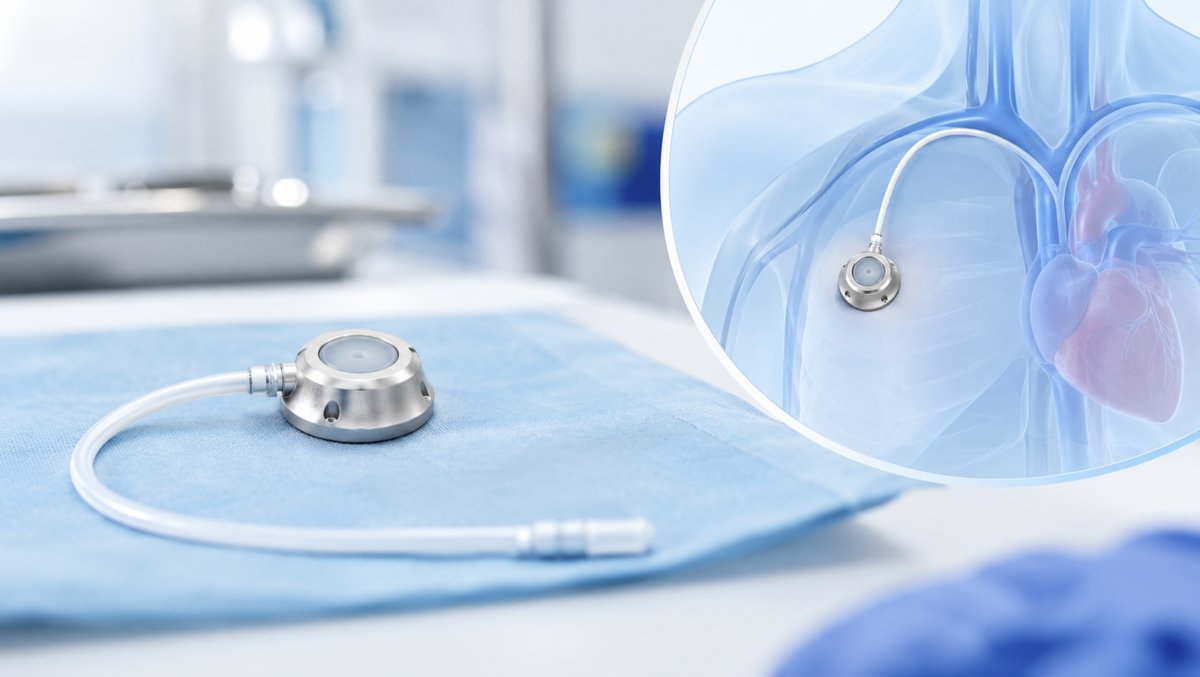
With a chemoport, the risk of extravasation (accidental leakage of medicine from the vein into the surrounding tissues) is lower, and it is more convenient to use. There is a risk of bruising though, along with soreness or scarring. However, the chemoport insertion process involves very low Infection risk (about 5 per cent). And there are few reported cases of jugular vein thrombosis or subclavian vein thrombosis – risks that can be accepted as the rewards outweigh the risks.
Aftercare and Recovery Timeline
Normally, stitches are done that dissolve on their own. If not, then on day five or six from the day of insertion, it is ready to be removed. But with self-dissolving stitches, removal and dressing are
usually not needed. Flushing of the port is however needed and monthly flushing is normally advised.
How Long Can a Chemoport Stay In
A Chemo port can be kept for as long as two years with monthly flushing. In metastatic cases, like in stage four cancer, which requires continuous chemotherapy for five to six years, removal and reinsertion of a chemoport may be called for. For other cases, the treatment is usually completed within one, or one and a half year. After the treatment is complete and a scan is done in about six months to ensure that there is no cancer recurrence, the port is removed.
Removal involves a surgery which is done under local anaesthesia. It is about a 15-minute procedure. It just needs to be seen that all the parts of the chemo port are removed.
Cost of Chemoport Insertion in India
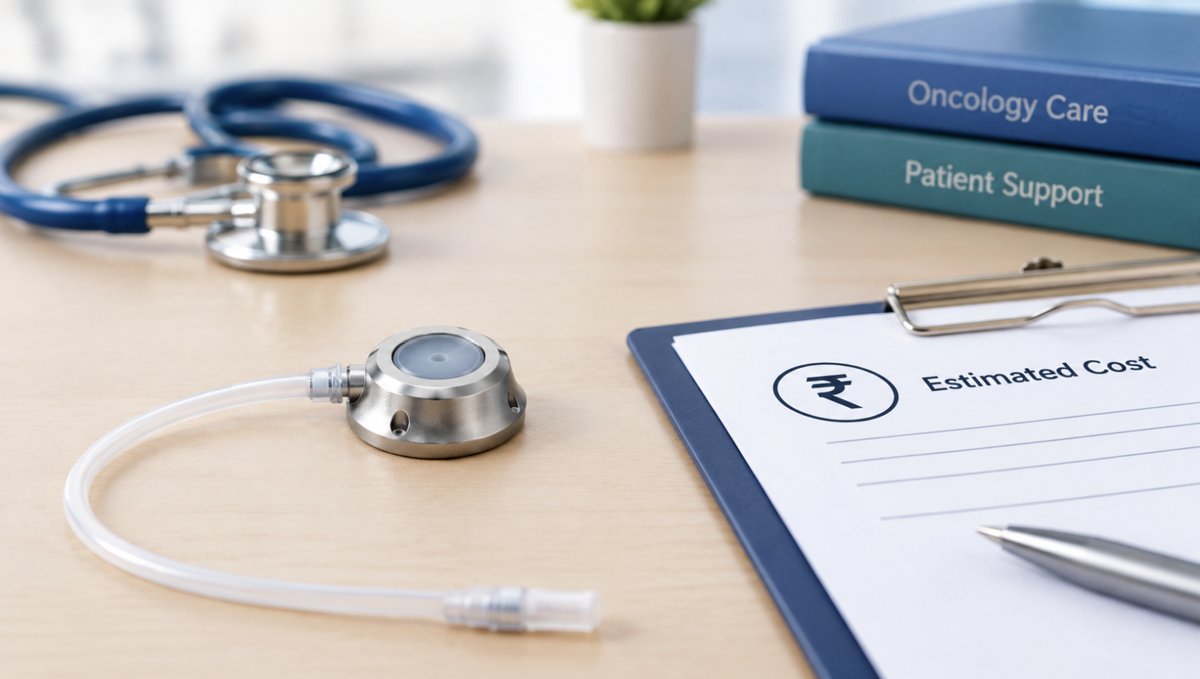
The cost of chemoport insertion typically ranges from Rs 50,000 to Rs 70,000 depending on the type of chemoport being used. A power port (one which helps administer drugs along with blood
transfusion) is costlier as it serves more than one purpose.
Frequently Asked Questions:
Is chemoport insertion painful?
It is slightly painful, but once it is inserted, the pain is substantially reduced.
Can I shower/swim with a chemoport?
Usually, when a patient is undergoing chemotherapy, showering is fine, but swimming is not advised as the resistance to infection stays compromised, swimming might expose the patient to various infections
Can I carry a shoulder bag?
Carrying a shoulder bag is not advised in case of a major surgery, but chemo port insertion is not a major surgery.
How soon can chemo start after insertion?
Chemotherapy can be started within two to three days after insertion.
Can chemoport insertion affect clothing or seat belts?
You need to wear loose-fitting and comfortable clothing which will not cause any irritation around the port site. Seat belts need to be worn comfortably but should not put too much pressure on the port site.
What should I discuss with my doctor before chemoport insertion?
It is necessary to inform the doctor about any anticoagulants you are taking, about allergic reactions, blood clotting or other issues with blood and about infections. This information is important for the assessment of possible risks.
In the case of elderly patients, they should have the port inserted before the start of chemotherapy, which will help in preserving peripheral veins for emergencies in the future, apart from saving them from the pain of continuous pinpricks. In case cancer is diagnosed, one should talk to the oncologist about the insertion of a chemo port. Usually, if the chemotherapy is expected to be eight cycles or more, we suggest a chemo port.
Conclusion
Chemoport insertion for delivering chemo without permanently harming a vein is now being done at the Peerless Hospital of the Peerless Group in Kolkata. A procedure, as explained, that is less painful, brings benefits that are not available with the traditional method and is highly encouraging from a patient’s standpoint and also facilitates the treatment procedure to a large extent.
You may also like

Breast cancer screening is a vital procedure that plays an important role in diagnosing breast cancer even in cases where no symptoms are present.
Read More

Symptoms After An Injury may range from simple distress to a possible emergency.
Read More
Hairline fracture is the term used to describe a minor breakage of the bones due to repetitive strain.
Read More
Which Doctor to Consult for Headaches?
Oct 7, 2026The headache is one of the most frequently reported medical conditions by many individuals looking for professional help
Read More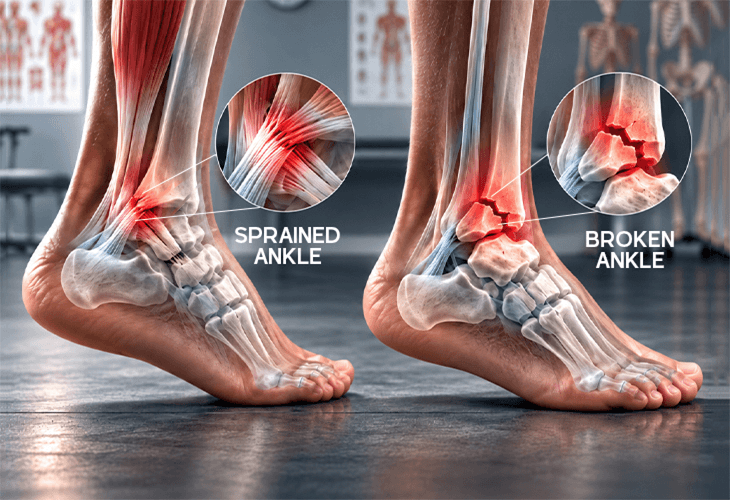
The exact statistics of ankle injury are difficult to get, but it is estimated that of all the trauma cases, about 10 per cent in general hospitals are related to the ankle.
Read More