




From Zamindars to Modern Palates: Rediscovering Bengal’s Gastronomy at Aaheli Renaissance
Did you know that ‘potol bhaja’ or fried pointed gourd was not even a thing in the Bengali kitchen? Yet, of the fries that one would savour with khichdi or with daal, it now ranks at the top. This transition from being nothing to becoming one of the prized items from a Bengali kitchen is an example of how the culinary tradition of Bengal has been influenced by various cultures to evolve into what it is today. And of all the Bengali restaurants in Kolkata, Aaheli Renaissance at the Peerless Hotel Kolkata brings you the most authentic curation of the journey from the Zamindars to the modern palates, which is a reflection of the rich culture of this part of India.
Read this blog to become a significant part of Bengal’s Gastronomy."
Bengali food is a reflection of its cosmopolitan culture.
It is said that the Bengali kitchen has been the melting pot of various cultural influences. Think about it in the context of the fact that there was a time when our kitchen survived on just chillies and cumin. From there to the days of liberal use of spices has been a long journey marked by various foreign influences at different times in our history. For example, this region had to wait for the Mughals to introduce us to other flavourful spices and also to slow cooking, which made ‘paturis’ possible.
Strange as it may sound, we were not a people who would indulge in elaborate spreads during weddings or other social occasions. It was not before the 15th century that we find a reference to an elaborate spread for celebrating a marriage. The first reference to a feast that goes beyond being measly is found in Manasamangal, written around 1485. At Behula’s wedding, we see a description of a feast in which 12 types of fish and five varieties of meat were served.
And, yes, till the sixteenth century, Bengalis didn’t care for mangoes. The Mughals came and introduced mangoes as a cherished fruit. Potatoes, onions, cauliflower and cabbage were distinctly frowned upon. Brinjal and pointed gourd were not popular. And we didn’t even know about pineapple and papaya till the Portuguese came. Channa or cottage cheese, which is now a regular presence in our kitchen, had to wait for the Portuguese to arrive.
From the starters to desserts, much of our kitchen bears zamindari influence.
As with everything else, it takes the ruling class to accept something first before it can percolate down to the ordinary folks. Bengal was no exception. The culinary culture underwent revolutionary changes from the 18th century. From the way of cooking like ‘dompokt’ (DUMPUKHT) to the items that adorned the plates of ordinary people, it was a churn that reflected the ability to absorb and thereby enrich ourselves. From culinary to other cultural practices, this ability was first noticed at the levels of the Bengali ‘bhadralok’, including the Zamindari houses like the Tagore household or the Rajbari of Bardawan.
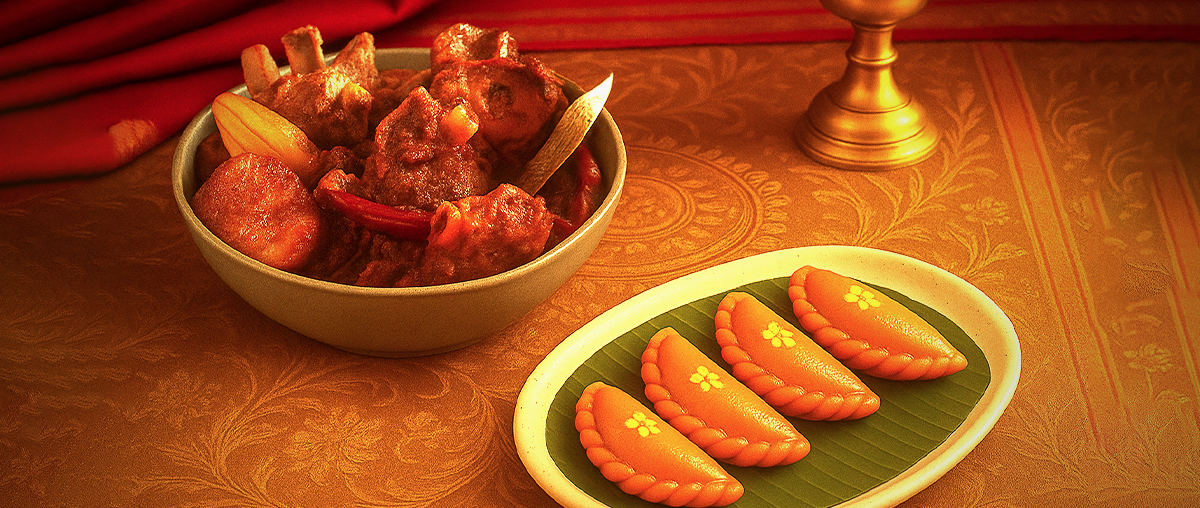
To taste this history, you have to visit the Aaheli Renaissance at the Peerless Hotel. The chefs here are eager to provide you with an experience that makes you travel through three centuries, shaping Bengal as we know it today. Every item that is served here has a narrative closely linked to the history of Bengal. Should you open your journey with Mourola macher kata jhuri, you should know that you are experiencing the same thing that Devi Choudhurani probably would have served you had you had the privilege of being served by her! She was, besides being part of a much-acclaimed novel by Bankim Chandra Chattopadhyay, a historical character who is said to have revolted against the East India Company, and was the queen of the Manthani estate in Rangpur (now in Bangladesh). She was like a Lady Robin Hood, and there is a Kali Temple in Jalpaiguri in North Bengal which bears her name.
The local legend has it that she would treat her guests with various fish items cooked with her hands. Among the items, her favourite fritter was Mourola macher kata jhuri.
Mutton recipes and desserts ruling the kitchen now tell interesting tales.
Or take the case of mutton. Sundays in Bengal are incomplete without mutton curry of various hues. All of which have been handed down to us through the influences of cultures that this part of the country came in contact with. And almost without exception, they got routed through the kitchens of various zamindars of Bengal. Take Mangsher Gorgora, for example. It is a highly recommended culinary experience at the Aaheli Renaissance restaurant in Kolkata. The history has it that the dish was introduced to the people of Bengal by the Rajbari of Burdwan.
The story of influence is incomplete if we don’t talk about desserts. Bengal is known for its rosogolla. And it wouldn’t have been there had the Portuguese not visited our shores. Before them, the thought of tampering with the milk in any form was an anathema. But they brought in the idea of channa. The zamindars took it to their kitchen, and rosogolla, along with a host of others, evolved along with the stories about their origins. Take, for example, the case of Chandrapauli, which, incidentally, is also there on the menu of Aaheli Renaissance Kolkata, that is said to have been introduced to our kitchen by the Nandan Bari (the house of the Nandans) of Bhawanipur.
The journey of Bengali cuisine narrates the history of Bengal's cosmopolitan culture, and Aaheli’s menu at the Peerless Hotel brings you a taste of it.
You may also like
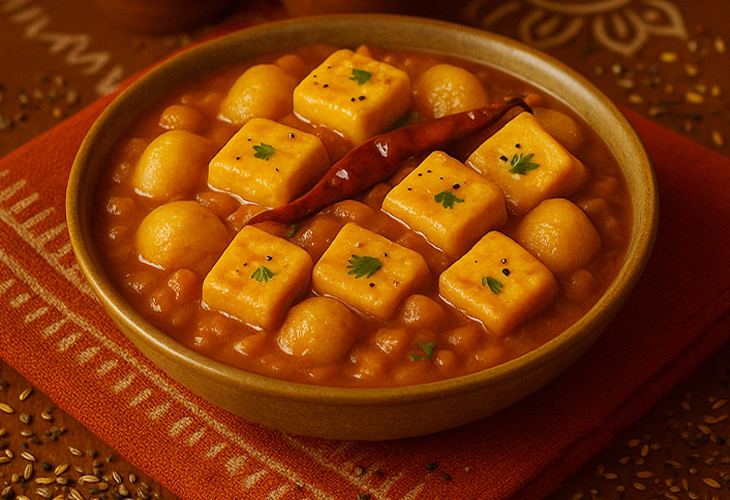
From Aaheli’s Chef’s Corner: Panch Phoron Chhana
May 20, 2025In the heat of the summer, one pines for those mellow, less spicy foods on the table. And the traditional Bengali kitchen has a plethora to satiate a King’s feast in the summer.
Read More
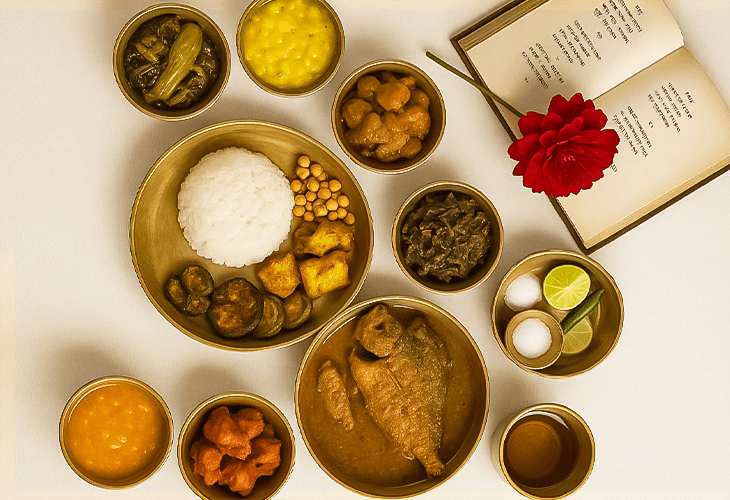
Aaheli: Reviving Tradition with a Green Twist
Apr 30, 2025Sustainability is more than making the right noises about fossil fuels – it is a way of life for us in the Peerless Group.
Read More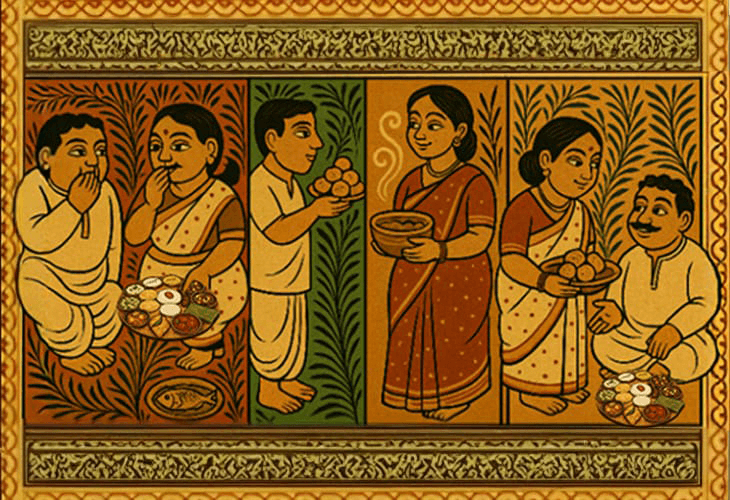
It is said that the Mughal Emperor Akbar had the then-royal lunar Hijri calendar aligned with solar agricultural practices as recorded by the Fasholi Shan (Harvest Calendar). This led to the development of the Bengali calendar Bangabda, with the first day of the first month, Boisakh, heralding the beginning of a new year.
Read More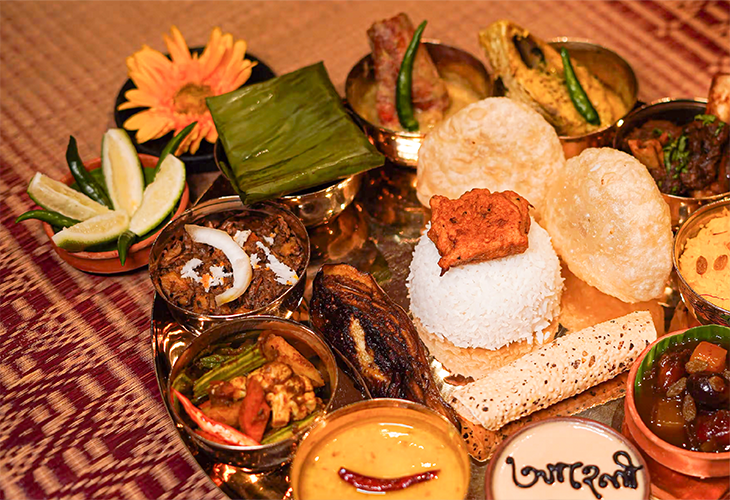
The Eclectic Essence of Bengali Cuisine
Mar 27, 2025Bengal has always been eclectic in embracing various cultures that crossed its path. This is why a quintessential Bengali was once described as someone who wore a dhoti and panjabi (kurta, as it is known elsewhere), smoked a cigar, and read Sartre!
Read More